
Universal Travel Adapter Price in Nepal 2026: Plug Types by Country
Short answer: The universal travel adapter price in Nepal at Quality Computer is Rs 2,699 for the Fantech TAC1, listed for 150+ countries, with USB-C and USB-A ports. Nepal uses Type C, D and M sockets at 230V, 50Hz. An adapter changes the plug shape, not the voltage. See all chargers and adapters.
Shop at Quality Computer
Travel adapters, chargers and power banks View all →
Plug types used in Nepal
Nepal has no single official plug standard. WorldStandards lists three socket types in use: Type C, the thin two-pin plug and the most common, plus the Indian-style three-pin Type D and the larger Type M. Mains power is 230V at 50Hz.
So the question before any trip is simple: which plug does your charger have, and which socket waits at the other end? A Type C charger from Nepal already fits sockets in Korea and most of Europe. A three-pin Type D or M plug fits none of the destinations in the table below. That’s where a travel adapter earns its place in your bag.
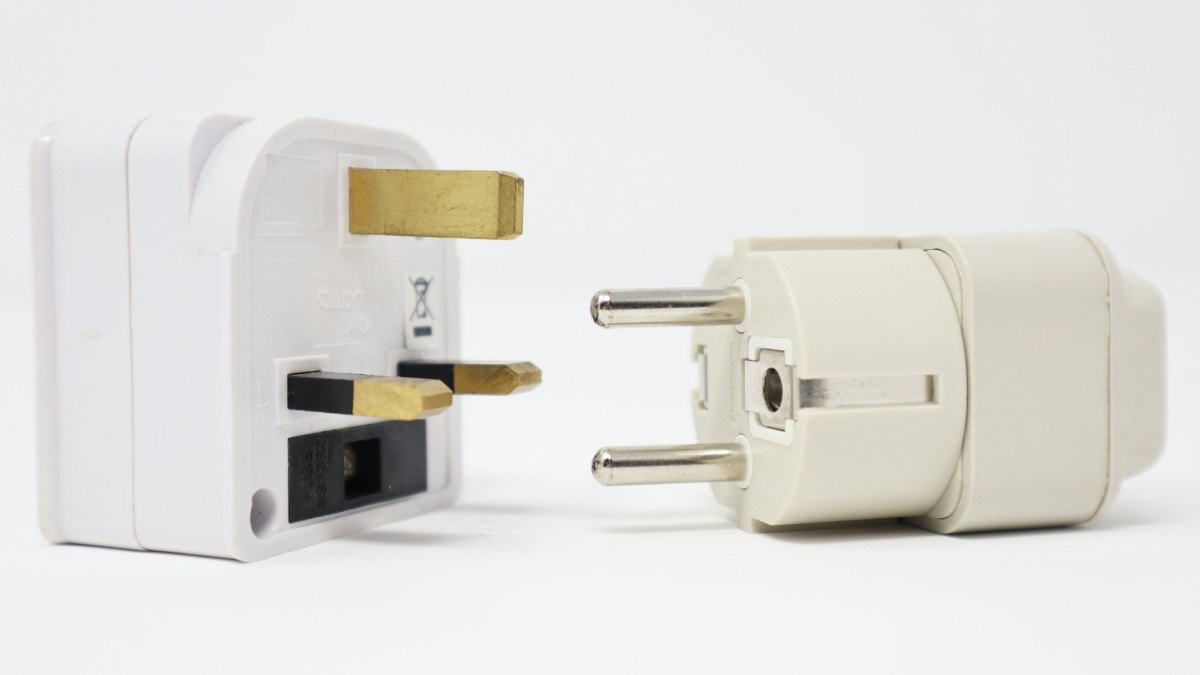
Which plug does each country use?
These are the common destinations for Nepali students and workers. Plug types, voltages and frequencies are from WorldStandards, except South Korea’s voltage, which is from the Korea Tourism Organization.
| Destination | Plug type | Voltage | Frequency | From Nepal you need |
|---|---|---|---|---|
| Australia | I | 230V | 50Hz | Adapter |
| United Kingdom | G | 230V | 50Hz | Adapter |
| Japan | A, B | 100V | 50Hz or 60Hz | Adapter; device must accept 100V |
| South Korea | C, F | 220V | 60Hz | Type C plugs fit; D and M need an adapter |
| UAE | G | 230V | 50Hz | Adapter |
| Saudi Arabia | G | 230V | 60Hz | Adapter |
| Qatar | G | 240V | 50Hz | Adapter |
| Kuwait | G | 230V | 50Hz | Adapter |
| Malaysia | G | 230V | 50Hz | Adapter |
| United States, Canada | A, B | 120V | 60Hz | Adapter; device must accept 120V |
| Germany, Spain, Portugal | C, F | 230V | 50Hz | Type C plugs fit; D and M need an adapter |
| France, Poland | C, E | 230V | 50Hz | Type C plugs fit; D and M need an adapter |
| Italy | C, F, L | 230V | 50Hz | Type C plugs fit; D and M need an adapter |
The Gulf is easy: the UAE, Saudi Arabia, Qatar and Kuwait all use the British Type G, and so does Malaysia, so one Type G adapter covers all of them. Saudi Arabia runs at 60Hz, which phone and laptop chargers usually handle without any help.
Japan, the US and Canada are the ones to watch. Their mains supply is 100V or 120V, roughly half of Nepal’s. The plug adapter is the easy part; the next section explains what to check on the label.
Do you need a voltage converter too?
A travel adapter only changes the shape of the plug. WorldStandards is blunt about it: adapters do not convert the voltage. So before you pack, read the small print on every charger.
- INPUT: 100-240V means the device is multi-voltage and works anywhere in the table above with just an adapter. Every charger in our table further down is rated 100V to 240V or wider on its listing.
- A single voltage, such as 230V, means it is built for Nepal’s supply. It will be fine in the UK, Australia, Europe, Korea and the Gulf, but not in Japan (100V) or the US and Canada (120V) without a converter or transformer.
Converters are meant for simple heating appliances and only for short use, one to two hours at a time, and a hair dryer can draw 1,600 to 2,000W. Our advice: don’t carry a 230V-only hair dryer, straightener or rice cooker to the US or Japan. Buy one there.
The 50Hz versus 60Hz difference usually doesn’t matter for phone and laptop chargers; WorldStandards notes that most modern electronics adjust on their own.
USB-C PD ports: can a travel adapter charge a laptop?
USB Power Delivery (PD) lets a USB-C charger and your device agree on a higher voltage for faster charging. USB-IF, which runs the standard, says PD was long limited to 100W (20V at 5A) and its latest revision reaches 240W.
The USB ports on a travel adapter are much smaller than that. On the Fantech TAC1, the USB-C port tops out at 12V/1.67A, about 20W, and the two ports share 5V/3A (15W) when both are in use, according to its listing. That’s fine for a phone, a watch or earbuds. It is too little for most laptops.
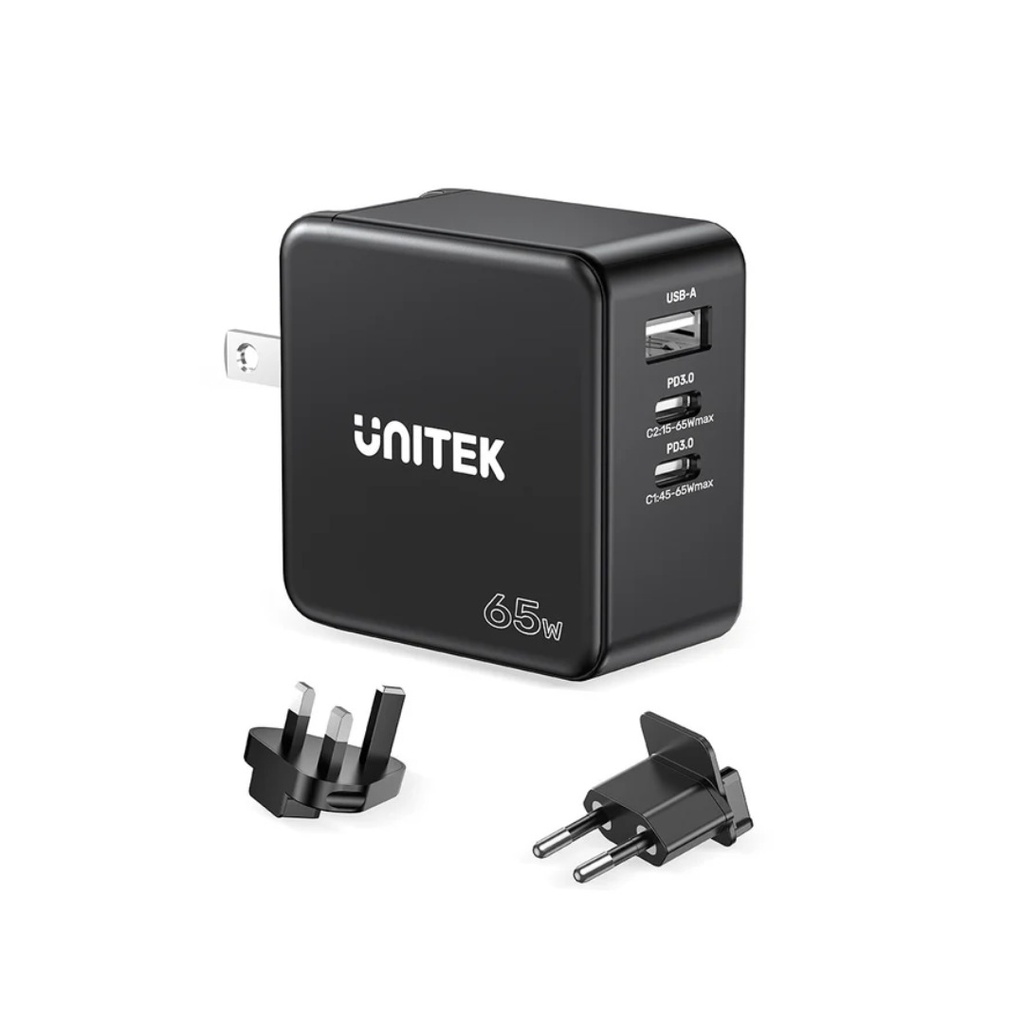
For a laptop, plug its own charger into the adapter’s wall socket, or carry a GaN charger with real wattage. The UNITEK P1117B gives up to 65W from a USB-C port, and Unitek’s spec page lists a UK and an EU plug with it. The UGREEN X757 is rated 100W in total. Pair either with a 100W-rated cable such as the UNITEK C14147ABK01.
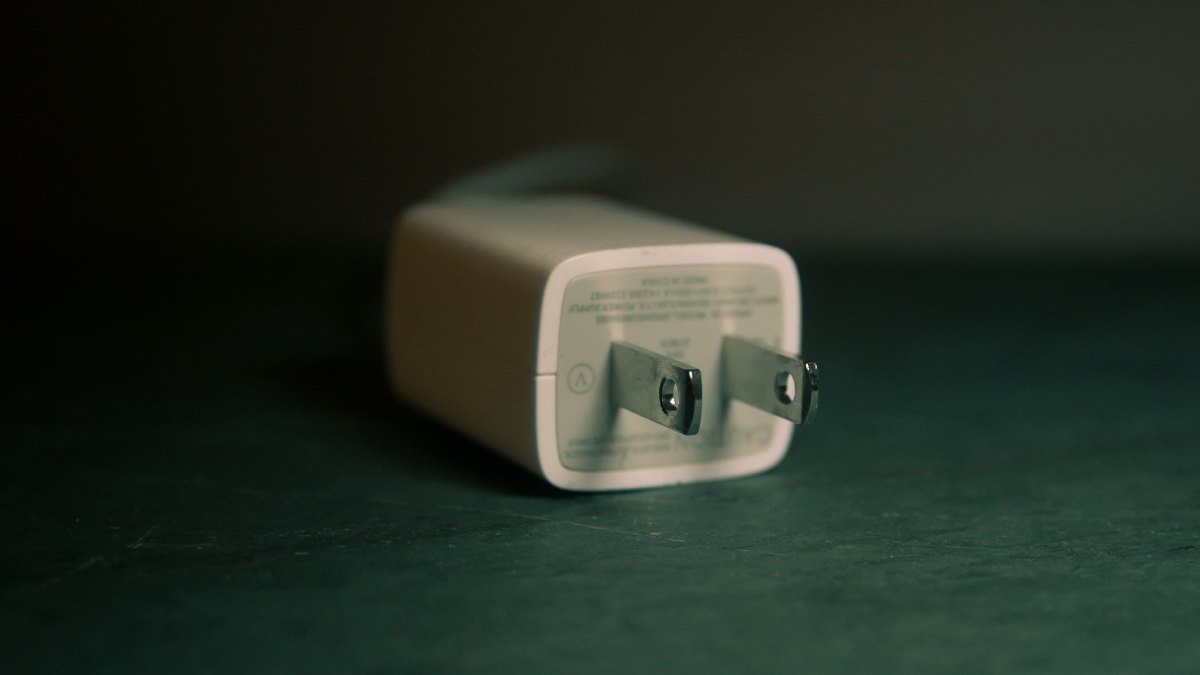
One more thing to check: some chargers sold in Nepal have American flat pins. The listings for our UGREEN 45W GaN charger and Mcdodo 33W charger both show a US plug, so they need an adapter at home too. If you’re choosing an iPhone charger, our iPhone charger guide compares the options.
Fuses and safety: what a travel adapter can power
A good universal adapter has a fuse. The Fantech TAC1 has two 8A fuses with overcurrent and overheat protection, and is rated up to 1,840W at 230V, according to its listing. That covers laptops, phones, cameras and a small fan. It does not cover a 2,000W hair dryer or kettle.
Three habits keep you and your gear safe:
- Push the adapter fully into the wall so no metal pin is exposed.
- Don’t plug one adapter into another to reach a socket.
- Don’t hang a heavy multiplug off the adapter; let it sit on the floor or desk.
A plain travel adapter does not absorb voltage spikes the way a surge protector does. If you need one at a desk abroad, our guide to multiplugs and surge protectors explains the difference, and our post on protecting your computer from power surges covers why it matters.
Power banks on flights: the 2026 rules
Your power bank goes in your hand luggage, never in checked bags. IATA’s 2026 guidance to airlines sets the basics: carry-on only, at most two per person, each protected against short circuit, and no recharging them while on board. Power banks up to 100Wh are allowed under the standard rules.
To work out watt-hours, multiply mAh by 3.7V and divide by 1,000. A 10,000mAh power bank is about 37Wh and a 20,000mAh one about 74Wh, both well under 100Wh. The Havit PB91 and Trusmi PB14-011 listings both show 74Wh for their 20,000mAh batteries.
Airlines can add stricter rules of their own, so check yours before you fly. Our power bank price guide covers the 2026 flight rules in detail, including the airlines that fly out of Nepal, and every power bank we sell.
Which travel adapter should you buy?
- Flying to Australia, the UK, the Gulf, Japan or the US, or to more than one country: buy a universal adapter. The Fantech TAC1 (Rs 2,699) is listed for 150+ countries and charges a phone from its own USB ports.
- Going to Korea or mainland Europe with Type C chargers only: you may not need an adapter at all. Check every plug before you pack, including the laptop’s.
- Taking a laptop: pack its own charger, or a 65W to 100W GaN charger, and use the adapter for the socket.
- Moving abroad for years: one adapter gets you through the first weeks; after that, local chargers and a local multiplug are simpler.
Travel adapters and chargers we sell
Everything in this table was available on our website on 7 November 2026. We deliver online orders across Nepal, and our store is in Birtamode, Jhapa.
| Product | What it is | Our price |
|---|---|---|
| Fantech TAC1 Power Cube Travel Multi Adapter | Universal travel adapter, listed for 150+ countries; USB-C PD + USB-A QC3.0; dual 8A fuses | Rs 2,699 |
| UNITEK P1117B 65W GaN Charger | 2 USB-C PD + 1 USB-A, 65W max; Unitek lists UK and EU plugs | Rs 3,980 |
| UGREEN X757 Nexode Pro 100W | 3-port GaN charger (2 USB-C, 1 USB-A), 100W total | Rs 7,890 |
| UGREEN 45W GaN Charger, Retractable Cable | 45W USB-C with built-in cable; foldable US plug | Rs 4,275 |
| Mcdodo 33W GaN Charger (CH-413) | 33W USB-C + USB-A; US plug; 100-260V input | Rs 3,000 |
| Havit PB89 10000mAh Power Bank | 10,000mAh, PD 20W/22.5W | Rs 2,550 |
| Havit PB91 20000mAh Power Bank | 20,000mAh (74Wh), PD 20W/22.5W | Rs 3,000 |
| Trusmi PB14-011 20000mAh 45W Power Bank | 20,000mAh (74Wh), 45W USB-C PD, display | Rs 5,000 |
| UNITEK C14147ABK01 USB-C Cable | 1m USB-C to USB-C, 100W PD | Rs 925 |
Prices checked on 7 November 2026.
In our store
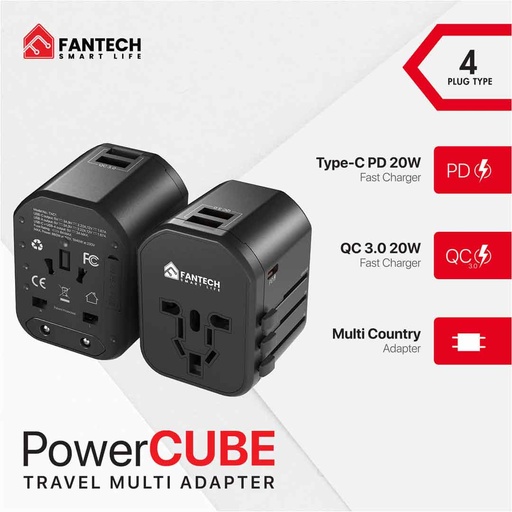
Fantech TAC1 Travel Adapter
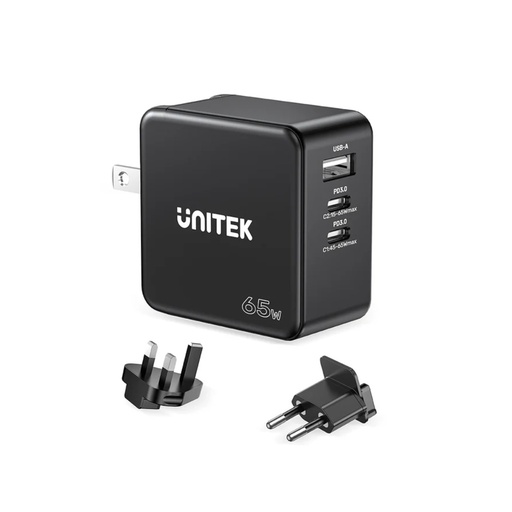
UNITEK P1117B 65W GaN Charger
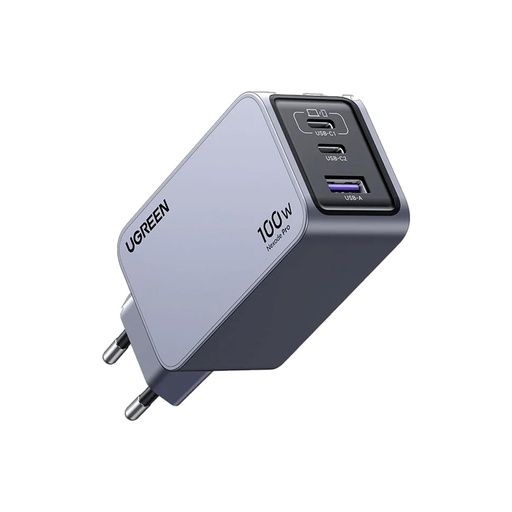
UGREEN X757 100W GaN Charger
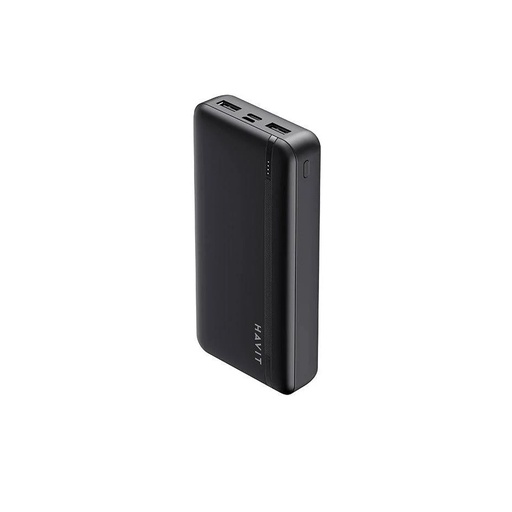
Havit PB91 20000mAh Power Bank
Frequently asked questions
What is the universal travel adapter price in Nepal?
At Quality Computer, the Fantech TAC1 universal travel adapter costs Rs 2,699 (website price on 7 November 2026). Its listing says it works in 150+ countries, and it has a USB-C PD port, a USB-A QC3.0 port and two 8A fuses.
Which plug type does Nepal use?
Nepal uses Type C, D and M sockets at 230V and 50Hz. Type C, the thin two-pin plug, is the most common, according to WorldStandards.
Do I need an adapter for Australia or the UK?
Yes. Australia uses Type I and the UK uses Type G, and neither accepts a Nepali plug. Both run at 230V and 50Hz like Nepal, so you need an adapter but not a voltage converter.
Does a travel adapter convert 230V to 110V?
No. A travel adapter only changes the shape of the plug. If the device label says INPUT 100-240V, an adapter is all you need in the US or Japan. A device rated for 230V only needs a voltage converter or transformer there.
Can I take a 20,000mAh power bank on a flight?
Yes, in your hand luggage. A 20,000mAh power bank is about 74Wh, under the 100Wh limit in IATA guidance for 2026, which also allows at most two power banks per person and bans recharging them on board the aircraft.
Can a travel adapter charge my laptop?
Yes, through its wall socket: plug your laptop charger into the adapter. The USB ports on most travel adapters are too weak for a laptop. The Fantech TAC1 USB-C port is rated up to about 20W, so for USB-C laptop charging carry a 65W or 100W GaN charger.
Sources
- Nepal: plugs, sockets and voltage, WorldStandards, 12 July 2025
- Plug, socket and voltage by country, WorldStandards, 7 September 2025
- South Korea: plugs, sockets and voltage, WorldStandards, 12 July 2025
- Useful information for travellers, WorldStandards, 1 May 2025
- Electricity & Communications, VisitKorea (Korea Tourism Organization), checked 7 November 2026
- USB Charger (USB Power Delivery), USB-IF, checked 7 November 2026
- Guidance document for operators: power banks, IATA, 31 March 2026
- UNITEK 65W GaN wall charger (P1117B), Unitek, checked 7 November 2026
- QC prices: qualitycomputer.com.np, 7 November 2026.