
Digital marketing is no longer limited to writing posts and managing social media pages. Modern digital marketers work with SEO and analytics tools, Canva, Google Ads, email marketing platforms, content calendars, spreadsheets, video editors and many browser tabs at the same time. Because of this, choosing the right laptop can make every day work faster and more comfortable.
A laptop with a modern processor, 16GB RAM, a fast SSD, a good Full HD or higher display, reliable battery life and comfortable portability can handle most marketing tasks. Users who regularly create videos, edit high-resolution content or use GPU-accelerated creative applications may benefit from a dedicated NVIDIA RTX graphics card.
Shop Best Digital Marketing Laptops
What Type of laptop Does a Digital Marketer Need?
A digital marketer normally needs a laptop that can handle
multitasking smoothly rather than one that is designed only for gaming. The
ideal configuration depends on the type of work, but the following
specifications are important.
RAM: 16GB is recommended for running browsers, analytics tools, design software and office applications together.
Storage: A 512GB SSD provides fast boot times and enough space for documents, media and marketing projects.
Display: A Full HD IPS display is suitable for everyday marketing work; a higher-quality OLED or high-resolution display is useful for creators.
Graphics: Integrated graphics are enough for normal digital marketing; an RTX GPU is useful for heavier video editing, 3D work and AI-assisted creative workloads.
Battery and portability: A lighter laptop with good battery life is useful for students, interns and marketers who work from different locations.
Connectivity: USB, HDMI, Wi-Fi and Bluetooth support make it easier to connect external displays, storage devices and accessories.
Best Laptop Specifications for Digital Marketing:
Digital Marketing Laptop vs Gaming Laptop
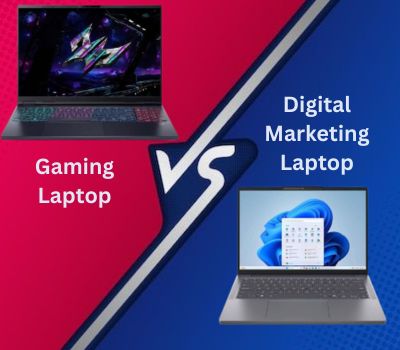
A digital marketer does not automatically need a gaming laptop. Gaming laptops often provide powerful CPUs, dedicated GPUs and strong cooling, but they can also be heavier and less convenient to carry. A business or creator-oriented laptop can be a better choice when the workload is mostly browser-based marketing, writing, analytics and social media management.
On the other hand, marketers who produce a large amount of video content can benefit from gaming or creator laptops because their dedicated GPUs can accelerate supported creative applications. The best choice depends on the actual workload rather than the job title alone.
Digital Marketing Laptop Buy Now
Does a Digital Marketer Really Need a Dedicated Graphics Card?
Not every digital marketer needs a dedicated graphics card. For everyday tasks such as SEO, content writing, social media management, Google Ads, email marketing and analytics, integrated graphics are generally enough.
A dedicated GPU becomes more useful when digital marketing involves video editing,
advanced graphic design, motion graphics, 3D content or AI-powered creative
applications. A dedicated NVIDIA RTX graphics card can help supported software
process demanding visual workloads more efficiently and reduce rendering and
export times. For example, someone who mainly works with Google Analytics,
Google Ads, Canva,
spreadsheets and browser-based tools can save money by choosing a laptop with good
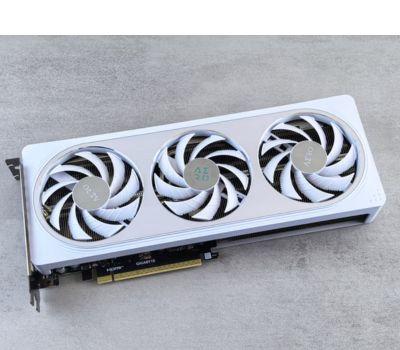 CPU performance and 16GB RAM instead of paying extra for a powerful GPU. On the other hand, a content creator or video-focused marketer who regularly works with applications such as Premiere Pro, After Effects or other GPU-accelerated software may benefit from a dedicated graphics card. The key is to choose a GPU based on your actual workload, not simply because a laptop has better graphics. For most digital marketers, investing in a better processor, 16GB RAM, SSD storage and a quality display can be more valuable than spending extra on a dedicated graphics card they may rarely use.
Ranking Best Laptops For Digital Marketing
5. Lenovo IdeaPad 1 — Best for Basic/Budget Digital Marketing
The Lenovo IdeaPad 1 comes seventh among the laptops in this comparison. It is designed more for basic productivity and everyday tasks, but its 16GB RAM and 512GB SSD still provide a reasonable foundation for SEO, content writing, social-media management, web research and browser-based marketing tools.
The laptop uses an AMD Ryzen 5 7520U processor and integrated Radeon 610M graphics. Its 15.6-inch Full HD IPS display is suitable for general productivity, but the graphics capability and processor are not intended for demanding video editing or advanced creative workloads. Therefore, it is more appropriate for someone starting out in digital marketing or working mainly with browser-based tools.
4. Acer Aspire 14 AI — Best for Portability and AI-Based Work
The Acer Aspire 14 AI ranks fifth and is aimed more toward digital marketers who prioritize portability, multitasking and AI-assisted productivity rather than heavy video editing. It comes with an Intel Core Ultra 5 226V processor, 16GB LPDDR5X RAM, 512GB PCIe 4.0 SSD and Intel Arc Graphics 130V. It also includes an Intel AI Boost NPU capable of up to 40 TOPS.
Its 14-inch WUXGA IPS touchscreen uses a 16:10 aspect ratio, while the laptop weighs approximately 1.4 kg. This makes it convenient for marketers who frequently move between meetings, offices, presentations and client work. However, its integrated graphics make it less suitable than the RTX-equipped laptops for intensive video editing or GPU-heavy creative work.
3. ASUS ZenBook 14 OLED — Best for Portable Digital Marketers
The ASUS ZenBook 14 OLED ranks third because it is particularly well suited to digital marketers who prioritize portability, display quality and professional productivity. The QC-listed model features an Intel Core Ultra 7-255H processor, 16GB LPDDR5X RAM, 512GB PCIe 4.0 SSD and Intel Arc Graphics.
Its biggest advantage is the 14-inch 3K OLED touchscreen with a 120Hz refresh rate, 100% DCI-P3 coverage and HDR support. This makes it particularly useful for Canva, social-media graphics, content creation and visual work. At around 1.2–1.28 kg depending on the configuration, it is also much easier to carry than gaming-oriented laptops such as the LOQ and Victus.
2. HP Victus 15 — Best Balanced Performance Option
The HP Victus 15 comes second because it provides dedicated RTX graphics while maintaining a relatively accessible price compared with higher-end creator laptops. The QC listing includes a configuration with an Intel Core i5-13420H, 16GB RAM, 512GB SSD and RTX 4050 6GB graphics. This combination is capable of handling normal digital marketing work as well as more demanding creative tasks such as video editing and graphic design.
For digital marketers who work with social-media content, Canva, Photoshop, short-form video, advertisements and analytics, the RTX 4050 provides considerably more graphics capability than the integrated graphics found in productivity-focused laptops. Its 15.6-inch Full HD IPS display runs at 144Hz, while the laptop also provides HDMI, USB ports, USB-C, Ethernet and a full-size keyboard with a numeric keypad.
1. Lenovo LOQ 15ARP9 — Best Overall for Digital Marketing
The Lenovo LOQ 15ARP9 takes the first position because it offers a strong combination of processing power, dedicated graphics, high RAM, a good display, and upgradeability. The QC-listed version comes with an AMD Ryzen 7 7435HS processor, 24GB DDR5 RAM, 512GB SSD, and NVIDIA RTX 4050 6GB graphics. This makes it suitable not only for everyday digital marketing tasks such as SEO, Google Ads, analytics, and content management, but also for Canva, Photoshop, video editing, and other demanding creative workloads.
Its 24GB RAM and RTX 4050 GPU give it a significant advantage when a digital marketer needs to work with multiple browser tabs, analytics dashboards, design software, video-editing applications, and other tools simultaneously. The 15.6-inch Full HD IPS display also has 144Hz refresh rate and 100% sRGB coverage, which is useful when working with visual content. The main trade-off is that it is heavier than thin productivity laptops, weighing around 2.38–2.45 kg.
Final Verdict
The best laptop for a digital marketer in depends on
the type of work being performed.
For SEO, content writing, social media
management, Google Ads and analytics, a lightweight laptop with
a modern processor, 16GB RAM and 512GB SSD is usually the best choice. For Canva and regular content creation,
a laptop with a good-quality IPS display and 16GB RAM is recommended. For video
editing and advanced creative work, a dedicated NVIDIA RTX GPU
can provide additional performance.
Among the current options, the Acer Aspire 14
AI is a strong choice for portable digital marketing work, while the Lenovo
IdeaPad Slim 3 offers a practical balance of performance and price.
For marketers who need dedicated graphics, the HP Victus 15 is a suitable option, while the
Lenovo LOQ 15ARP10E is better suited to advanced creative and AI workloads.
Frequently Asked Questions
A laptop with a modern Core i5/Core Ultra 5 or Ryzen 5 processor, 16GB RAM, 512GB SSD and a good Full HD IPS display is suitable for most digital marketing tasks. Content creators may benefit from a dedicated GPU.
8GB can handle basic tasks such as email, social media and simple web-based work, but 16GB is a better choice for multitasking and long-term use.
16GB RAM is recommended for most digital marketers because it allows smooth multitasking between browsers, analytics tools, spreadsheets, Canva and other applications.
Website may use cookies to personalize and facilitate maximum navigation of the User by this site. The User may configure his / her browser to notify and reject the installation of the cookies sent by us.
Check the processor, RAM, SSD capacity, display quality, battery life, weight, upgrade options, warranty, authorized seller and after-sales service.
Yes. An SSD provides faster startup, quicker application loading and smoother file access compared with a traditional hard drive. A 512GB SSD is a good starting point for most users.