








Fire Extinguisher Price in Nepal
Fire extinguisher buying guideFire extinguisher FAQ
Fire extinguisher buying guide: type, size and monthly checks
A fire extinguisher is for a small fire that has only just started. Pick one rated for the fires you're most likely to have, in a size you can handle, and keep it checked so it works on the day you need it.
1. What the ABC rating covers
Every extinguisher on this page is an ABC type, named after the classes of fire it's rated for. In the US system, A is ordinary materials like cloth, wood and paper, B is flammable liquids like petrol, oil and oil-based paint, and C is electrical equipment that is plugged in. The US Fire Administration says a multipurpose A-B-C extinguisher can be used on most types of home fires (USFA).
The European system used in the UK gives C to flammable gases such as butane, and lists electrical fires separately (Surrey Fire and Rescue Service). Under either system, ABC covers solids and liquids. Read the label on the cylinder to see exactly which classes and symbols yours shows.
An ABC extinguisher is normally a dry powder type. Derbyshire Fire and Rescue Service describes dry powder as the multi-purpose extinguisher for Class A, B and C fires (Derbyshire Fire and Rescue Service). Cooking oil and fat fires are a class of their own, and Surrey's fire service says dry powder shouldn't be used on them.
2. Around computers, inverters and wiring
Never use water on a fire in electrical equipment. Surrey Fire and Rescue Service says dry powder extinguishers can be used on fires involving electrical equipment up to 1000 volts, which takes in normal 230V household supply. It also says CO2 extinguishers are mainly used for electrical fire risks, and that water and foam extinguishers shouldn't be used on electrical equipment (Surrey Fire and Rescue Service).
Powder has one drawback indoors. Derbyshire Fire and Rescue Service warns that in some confined spaces it can cause loss of visibility or make breathing harder (Derbyshire Fire and Rescue Service). Keep that in mind for a small server room, store room or cabin.
3. Choose the size: 2KG, 6KG or 9KG
The number is the weight of powder inside. More powder lasts longer, but the cylinder gets heavier to lift and aim. The US Fire Administration recommends the largest extinguisher you can safely and comfortably operate (USFA).
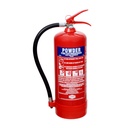
The SWIFGO ABC Fire Extinguisher 2KG is the light one to keep handy at home. The 6KG and 9KG sizes, such as the ABC Fire Extinguisher 9KG, hold more powder for larger spaces like shops, offices and warehouses, but take more strength. For a business, ask a fire safety professional how many you need and where they should hang.
4. Check it every month
Kidde, an extinguisher maker, says extinguishers should be visually inspected once a month. Check that the pressure gauge needle is in the green zone (Kidde). If it isn't, follow the label or manual, or contact the maker or your fire service. The US Fire Administration adds that some extinguishers need shaking every month, and that some can be recharged while others must be replaced when the pressure is too low (USFA).
Keep it where you can reach it, not behind boxes, and wipe off dust and grease. In workplaces, the US safety agency OSHA requires a monthly visual check plus a maintenance check every year (OSHA). Follow the instructions on your own extinguisher's label, and once it has been used, even briefly, check the gauge and get it refilled or replaced before you rely on it again.
5. Know when to leave instead
The US Fire Administration's rule is to use an extinguisher only if the fire is small and contained in a single object or surface, everyone has been alerted, the fire brigade has been called, you're safe from the smoke, and you have a clear way out. If any of those isn't true, or you're unsure, leave the building and call the fire brigade from outside. Young children and older adults shouldn't use extinguishers (USFA).
To use one, USFA teaches PASS: pull the pin, aim low at the base of the fire, squeeze the lever slowly and evenly, and sweep the nozzle from side to side.
Buying from Quality Computer
Every fire extinguisher comes with a VAT bill. We usually deliver all over Nepal in 2 to 5 days, and delivery is free within 15 km on products over Rs 5,000. You can also visit our store on Bhadrapur Road, Birtamode, or call 023-530150 or 9863609150.
More reading: Extension cord vs surge protector · Protecting your computer from power surges · Safety and protection products price in Nepal
Fire extinguisher FAQ
Which fire extinguisher is best for a home?
An ABC extinguisher, in the largest size you can lift and aim comfortably. USFA says a multipurpose A-B-C extinguisher can be used on most types of home fires. It isn't for cooking oil fires.
Can I use an ABC fire extinguisher on an electrical fire?
Surrey Fire and Rescue Service says dry powder extinguishers can be used on electrical equipment up to 1000 volts, which covers household wiring and appliances. Never use water. In a small closed room the powder can make it hard to see and breathe.
How do I know my extinguisher still works?
Check it once a month. The gauge needle should be in the green zone, and the cylinder, hose and nozzle should have no visible damage. If the needle is out of the green, or the extinguisher has been used, get it refilled or replaced.
When should I not use a fire extinguisher?
Don't use one if the fire is spreading beyond one object, the room is filling with smoke, you don't have a clear way out, or you're unsure. Get everyone out and call the fire brigade.
What do 2KG, 6KG and 9KG mean?
The weight of powder inside. A 2KG extinguisher is easy to handle at home, while 6KG and 9KG models last longer for shops, offices and warehouses but are heavier.
Which fire extinguisher brands do you sell?
SWIFGO, plus 6KG and 9KG ABC extinguishers whose names don't give a brand. Every price on this page is our current website price.
|
|
|
|
|
|
|
|
|
|