
Wi-Fi 6 vs Wi-Fi 6E: Which Should Your Laptop Have in Nepal?
When buying a laptop, most people focus on the processor, RAM, storage, and graphics card. But there is another specification that affects your everyday experience: Wi-Fi. Whether you're attending online classes, working from home, streaming YouTube, gaming, or downloading large files, your laptop's Wi-Fi capability plays an important role. Many laptops in Nepal now come with Wi-Fi 6 or Wi-Fi 6E. So which one should you choose? Let's make it simple.
The Short Answer
For most students, office users, and everyday buyers in Nepal, Wi-Fi 6 is already excellent. Choose Wi-Fi 6E if you want a more future-ready laptop and have (or plan to buy) a compatible router that supports the newer 6 GHz band. For most customers, the decision should depend on your budget and usage, not just the Wi-Fi version.
Both Laptop available at Quality Computer
Key Takeaways
Wi-Fi 6 handles everyday use well. It is the mainstream standard in most homes today, managing streaming, browsing, and gaming across multiple devices reliably.
Wi-Fi 6E adds one thing: the 6 GHz band. That new frequency is less congested and exclusive to Wi-Fi 6E and newer devices, which means faster, cleaner connections for compatible hardware.
The speed gain is real-world, not theoretical. Wi-Fi 6 and Wi-Fi 6E share the same maximum speed ceiling. Wi-Fi 6E is faster in practice because the 6 GHz band has less interference and more available channels.
Both your router and your device need to support Wi-Fi 6E, to take advantage of the faster connection. If your phone or laptop is Wi-Fi 6 or older, it will not access the 6 GHz band, even with a Wi-Fi 6E router.
What Is Wi-Fi 6?
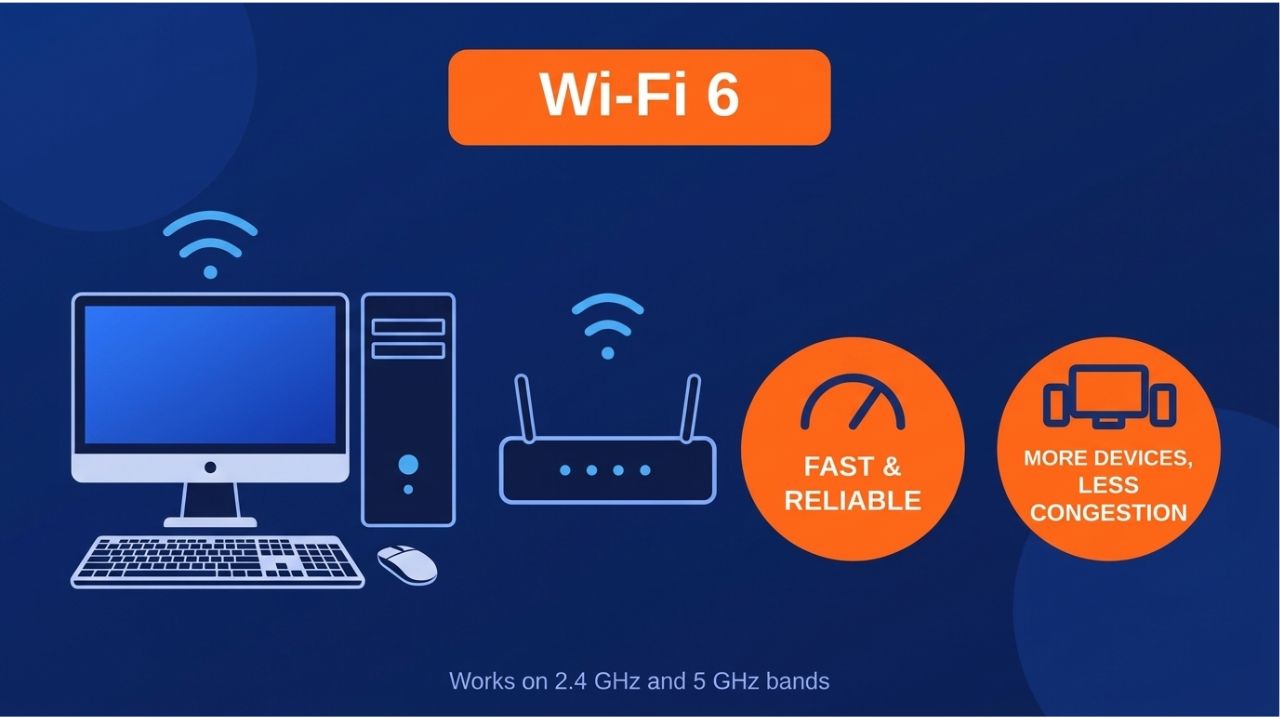
Wi-Fi 6 is the current standard found in many popular laptops. It improves speed, efficiency, and performance when multiple devices are connected to the same network. It works on the traditional 2.4 GHz and 5 GHz bands. In practical terms, Wi-Fi 6 is more than enough for:
Online classes
Zoom and Google Meet
Office work
YouTube and Netflix streaming
Web browsing
Programming
Everyday downloads
Casual gaming
If you have a normal home internet connection in Nepal, Wi-Fi 6 can easily handle your daily workload.
What Is Wi-Fi 6E?
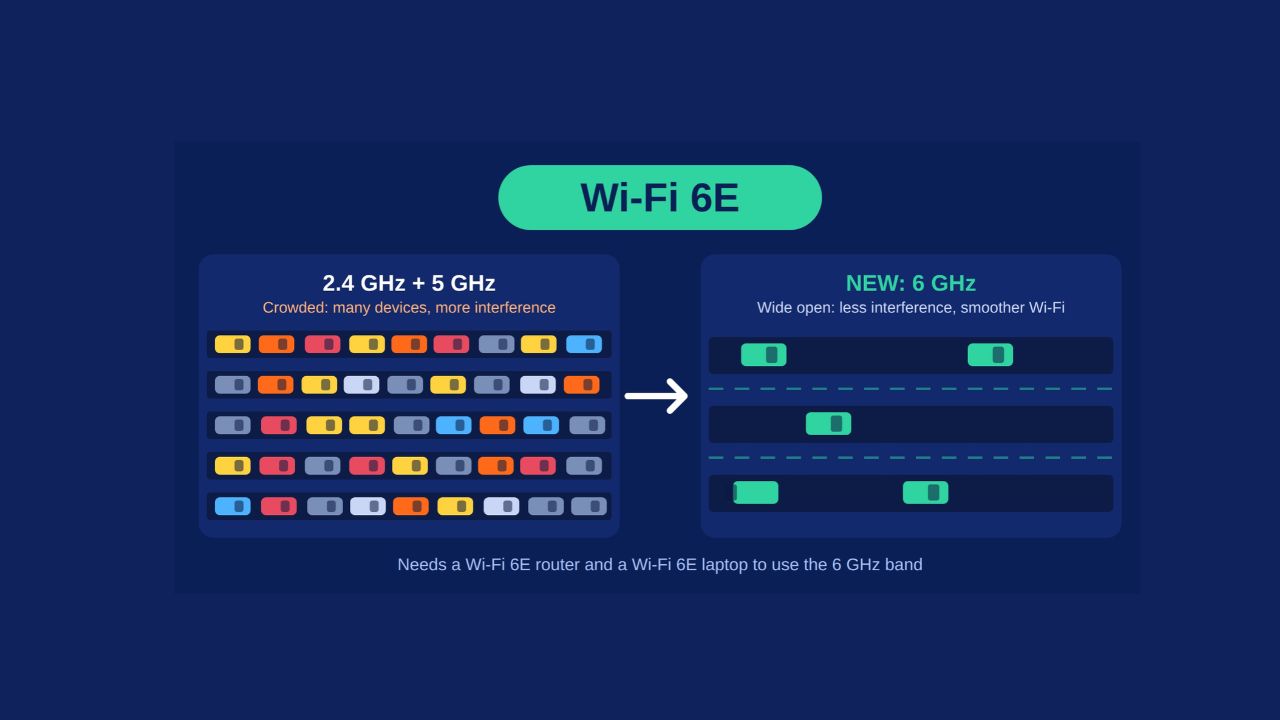
Wi-Fi 6E is basically Wi-Fi 6 with access to an additional 6 GHz band. Why does this matter? Imagine a busy road in Kathmandu during office hours. The 2.4 GHz and 5 GHz bands are like crowded roads filled with traffic. The 6 GHz band is like a newly opened highway with fewer vehicles. This means:
Less congestion
More stable wireless performance
Better speeds in crowded environments
Improved experience when many devices are connected
However, you only benefit from Wi-Fi 6E if your router also supports the 6 GHz band.
Wi-Fi 6 vs Wi-Fi 6E
For most Nepalese homes today, the difference is not huge. But if you're buying a laptop for the next 4–5 years, Wi-Fi 6E offers a little more future-proofing.
Which Laptop Should You Buy?
Instead of focusing only on Wi-Fi, think about what you actually do with your laptop.
For Students and Office Users
The Lenovo IdeaPad Slim 3 15IRH10R is a practical choice. It comes with an Intel Core 5 processor, 16GB RAM, 512GB SSD, and Wi-Fi 6 connectivity. At around Rs 123,900, it offers excellent value for study, office work, programming, and everyday use. For most college students in Nepal, this is the kind of laptop that delivers everything they need without paying extra for features they may never use.
For Gaming and Creative Work
If you play games, edit videos, design graphics, or use demanding software, the ASUS Vivobook 16X K3605VC is worth considering. It offers:
Intel Core i5 H-series processor
NVIDIA RTX 3050 graphics
16-inch display
Wi-Fi 6E connectivity
144Hz display refresh rate
The RTX graphics card will make a much bigger difference to your experience than Wi-Fi alone.
For Future-Ready Buyers
If you plan to keep your laptop for many years and want access to the latest wireless technology, choosing a Wi-Fi 6E model makes sense. But remember: having Wi-Fi 6E does not automatically make your internet faster. Your router, internet package, and network environment matter too.
A Practical Example
Let's say you have a 100 Mbps fiber connection at home. Whether your laptop has Wi-Fi 6 or Wi-Fi 6E, you'll still be using that same 100 Mbps internet plan. You won't suddenly get 500 Mbps just because your laptop supports Wi-Fi 6E. That's why many buyers should prioritize:
Better processor
More RAM
Faster SSD
Good display
Battery life
before worrying about Wi-Fi 6 versus Wi-Fi 6E.
What We Recommend at Quality Computer
If you're buying a laptop in Nepal today:
Choose Wi-Fi 6 if you're a student, office worker, or everyday user.
Choose Wi-Fi 6E if you're a gamer, creator, or planning for long-term use.
Don't spend extra money on Wi-Fi alone if it means compromising on RAM, storage, or processor performance.
A laptop with a strong processor and 16GB RAM will improve your daily experience far more than upgrading from Wi-Fi 6 to Wi-Fi 6E.
Final Verdict
For most customers in Nepal, Wi-Fi 6 remains the best value choice. It is fast, reliable, and more than capable for online classes, office work, streaming, and everyday tasks. Wi-Fi 6E is a nice bonus, especially if you have a compatible router and want a more future-ready laptop. The smart approach is simple: choose the laptop that best matches your budget and workload first, then consider the Wi-Fi standard as an added advantage rather than the main buying factor. At Quality Computer, you'll find laptops with both Wi-Fi 6 and Wi-Fi 6E, allowing you to choose the right balance of performance, connectivity, and value for your needs.
Is Wi-Fi 6 still good in 2026?
Yes. Wi-Fi 6 is still an excellent choice for most users in Nepal. It provides fast and reliable connectivity for online classes, office work, streaming, browsing, and everyday tasks.
What is the main difference between Wi-Fi 6 and Wi-Fi 6E?
The biggest difference is that Wi-Fi 6E supports the 6 GHz band, while Wi-Fi 6 only uses the 2.4 GHz and 5 GHz bands. The additional 6 GHz band can help reduce network congestion and improve wireless performance in supported environments.
Do I need a special router for Wi-Fi 6E?
Yes. To use the 6 GHz band, both your laptop and router must support Wi-Fi 6E. Otherwise, the laptop will connect using standard Wi-Fi 6 functionality.
Is Wi-Fi 6E faster than Wi-Fi 6?
Not always. For most internet connections in Nepal, the difference may not be noticeable during normal use. Wi-Fi 6E mainly provides a cleaner wireless connection and better performance in crowded network environments.
Which is better for long-term use: Wi-Fi 6 or Wi-Fi 6E?
If the price difference is small, Wi-Fi 6E is generally the better long-term choice because it supports the newer 6 GHz band and offers greater future readiness.
Which laptop should I choose for everyday use?
For students and office users, laptops like the Lenovo IdeaPad Slim 3 with Wi-Fi 6 provide excellent value and performance. For gaming, creative work, and users wanting newer connectivity, a Wi-Fi 6E laptop such as the ASUS Vivobook 16X can be a good option.