
MacBook Pro M5 Launch Date & Specs
The MacBook Pro lineup featuring the M5 family of chips was released in two phases: the base M5 model arrived in late 2025, followed by the high-end M5 Pro and M5 Max models in early 2026.
MacBook Air Price in Nepal (All Models)
MacBook Pro Price in Nepal (All Models)
MacBook Pro M5 Price in Nepal
The upcoming MacBook Pro M5 (14-inch, 16GB/512GB) will cost around रु 2,79,000 in Nepal. Higher configurations like the 1TB or 24GB RAM variants will range between रु 320,000 – 340,000. These estimates reflect the average markup Apple laptops usually get when they reach the Nepali market.
The Massive AI Shift
The headlines for the M5 aren't just about standard graphics rendering; they are focused on localized artificial intelligence. While all chips retain a dedicated 16-core Neural Engine, the M5 Pro and M5 Max architectures integrate AI accelerators directly into the GPU clusters. This allows on-device Large Language Models (LLMs) to process prompts roughly 4x faster than the older M4 generation.
Launch Date in Nepal
The M5 MacBook Pro launched for pre-order on October 15 in the US, while being available to the general public from October 22, 2025. If we look at last year's timing the M4 MacBook Pro is expected to be launched in around January 2026 in Nepal. The blog will be updated as soon as the official launch date is announced through the official channels.
The Lineup
Apple generally announces all the MacBook Pro chips at once, but this time, they decided to skip the launch of M5 Pro and M5 Max, delaying their release for next year. The new M5 MacBook Pros come in three variants: the base model starting with 16GB Memory & 512 GB SSD Storage, and the other two with 16GB and 24GB memory, with both having 1TB of SSD storage. Meanwhile, all three variants will have the same processing power: a 10-Core CPU with a 10-Core GPU, which is the same as last year's, but Apple has promised to have made key changes under the hood.
Key Specifications MacBook M5
M5 Chip Performance: The Apple M5 chip leverages an enhanced 3nm architecture and per-core GPU neural accelerators to deliver up to a 35% jump in CPU speeds alongside 4x faster localized AI and LLM prompt processing over previous generations.
Memory & Storage: The M5 MacBook line introduces LPDDR5X unified memory configuration options up to 128GB with a peak bandwidth of 614 GB/s, paired with high-speed SSD storage capacities ranging from a standard 512GB/1TB base up to an 8TB ceiling.
Display:: The M5 MacBook Pro features a 120Hz Liquid Retina XDR mini-LED display that hits 1,000 nits of sustained outdoor SDR brightness (1,600 nits peak HDR) and introduces a glare-reducing nano-texture matte glass upgrade option.
Battery & Others: The M5 MacBook lineup delivers up to 18 hours of battery life on the fanless Air and a record-breaking 24 hours on the Pro, while rounding out the spec sheet with Wi-Fi 7, Bluetooth 6, a 12MP Center Stage camera, and spatial audio speakers.
The new 14-inch M5 MacBook Pros will have a Liquid Retina XDR display with a resolution of 3024 x 1964 pixels, with 1600 nits peak HDR brightness and 120Hz refresh rate with ProMotion technology which is the same as last year. Apple also added a nano-texture glass option, finally giving professionals who edit in bright studios (or just have too many windows behind them) a reason to skip the fingerprint-magnet glossy screen.
And if you’re the type who runs dual monitors, no problem. The M5 MacBook Pro can now drive two external high-resolution displays without breaking a sweat, thanks to its efficient GPU pipeline. Sure, Apple hasn’t boosted the resolution or refresh rate this year, but with this kind of panel performance, maybe this is the next big leap for AI in the Mac.
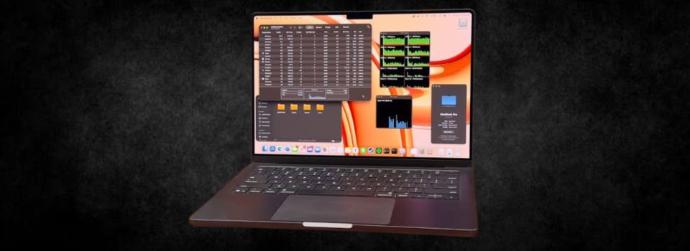
Storage, Battery & More
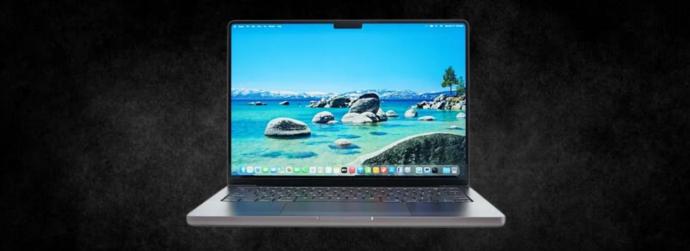
The M5 MacBook lineup pushes baseline internal storage minimums forward, with the MacBook Air starting at 512GB and the MacBook Pro offering up to 2x faster read and write speeds over its predecessor on a base 512GB or 1TB SSD. For professionals managing vast datasets, extensive localized code repositories, or RAW 8K video assets, the high-end configuration options scale up to a 4TB ceiling for standard M5 configurations and a massive 8TB storage vault exclusively for the M5 Max.
Battery performance achieves incredible thresholds thanks to the efficiency optimizations of TSMC’s enhanced 3nm process nodes. The fanless M5 MacBook Air stretches up to 18 hours of runtime, while the 14-inch base M5 MacBook Pro delivers a record-breaking 24 hours of continuous video streaming on a single charge. High-performance M5 Pro and M5 Max models scale down slightly due to increased compute demands but still comfortably push between 20 to 22 hours of streaming, maintaining full speed even while disconnected from a power outlet.
Rounding out the ancillary tech specs, the M5 Pro and M5 Max introduce Apple's dedicated N1 wireless silicon to deliver native Wi-Fi 7 capabilities and Bluetooth 6 connectivity for lightning-fast, low-latency networking. Physical interfaces include a triple array of high-bandwidth Thunderbolt 5 ports on the top-tier Pro models capable of up to 120 Gbps transfer speeds, an advanced 12MP Center Stage webcam with Desk View support, and a high-fidelity six-speaker spatial audio system.
The MacBook Pro with the M5 family of chips (M5, M5 Pro, and M5 Max) pushes Apple's flagship laptop into an AI-centric generation. While it represents a major internal jump—especially for data scientists, creators, and machine learning developers—it maintains the exact same outer shell.
Pros and Cons of the MacBook Pro M5
Massive AI Performance Leap: The inclusion of dedicated Neural Accelerators baked directly into each GPU core is the star of this generation. Local Large Language Model (LLM) prompt processing and image generation are up to 4x faster than previous M-series models.
Substantial Multi-Threaded Power: Thanks to the new "Super Core" architecture, heavy-duty tasks like Handbrake encoding, local compiling, and 3D rendering in Blender see an immediate 50–70% speed boost over older M-series chips.
Outdoor-Ready Display & Anti-Glare Option: The Mini-LED Liquid Retina XDR screen jumps to 1,000 nits of sustained SDR brightness (up from 600 nits), making it perfectly usable in direct sunlight. Additionally, the optional nano-texture matte finish upgrade effectively eliminates harsh ambient reflections.
Thunderbolt 5 Speeds: Available on the M5 Pro and Max, Thunderbolt 5 unlocks an insane 120 Gbps of bandwidth, allowing high-end creatives to scrub through multi-cam RAW 8K timelines off external storage without a hint of lag.
Industry-Leading Battery Life: Battery efficiency remains unmatched. The base 14-inch model can stream video for up to 24 hours on a single charge, and even the power-hungry M5 Pro/Max variants comfortably achieve 20+ hours during lighter workloads.
Upgraded Wireless & SSD Baselines: The M5 Pro and Max feature native Wi-Fi 7 and Bluetooth 6 support. Storage read/write benchmarks have also nearly doubled, making large file transfers blindingly fast
-
High price: The estimated price in Nepal (around रु 278,750 for the 14″ 16GB/512GB model) puts it out of reach for many budget buyers.
-
Not a significant Upgrade: If you’re coming from an M4 or similar model, the performance boost may not feel dramatic.
-
Over spec for casual use: If your work is limited to browsing, streaming, documents or light photo editing, the M5 Pro may be more laptop than you need and a less expensive model may suffice.
-
Weight and size: Though thinner than many PCs, the 14″ MacBook Pro is still heavier and larger than ultra thin laptops like the MacBook Air, so portability could be a trade off.
-
Limited repair or upgradability: Like most modern Apple laptops, internal components such as RAM and storage are not user upgradeable, so you’ll need to choose your specs wisely at purchase.
The Base M5 Penalties: The entry-level 14-inch MacBook Pro misses out on several generational upgrades. It does not feature Thunderbolt 5 (it sticks with Thunderbolt 4) and completely lacks Apple's N1 wireless chip, meaning it is stuck on older Wi-Fi 6E and Bluetooth 5.3 standards.
Unchanged Physical Design: If you were hoping for a thinner chassis, smaller display bezels, a hidden notch, or new colors, you will be disappointed. The hardware uses the exact same enclosure Apple has deployed since 2021.
Zero Post-Purchase Upgrades: In classic Apple fashion, the unified memory and SSD are soldered onto the SoC. If your workflow outgrows your hardware two years from now, your only option is to buy a completely new machine.
Diminishing Returns for Casual Users: If your daily tasks consist of web browsing, typing documents, and basic media consumption, you will not notice a real-world difference between this and an M3 or M4 MacBook.
No Face ID or USB-A: Despite the display notch remaining a permanent fixture, biometric login is still restricted to the Touch ID keyboard button. Legacy USB-A ports remain entirely absent
-
The Pros: Where It Excels
The Cons: Where It Falls Short
Is the MacBook Pro M5 Worth It?
When It IS Absolute Worth It
You are upgrading from an Intel, M1, or M2 Mac: If your machine is several years old, the jump will feel staggering. You are not just getting a massive raw performance boost from the new "Super Cores"; you are gaining a significantly better 120Hz ProMotion screen, double the sustained outdoor SDR display brightness (1,000 nits), and double the base storage floor (now starting at 1TB on Pro chips).
Your livelihood relies on local AI/LLM deployment: This is the primary reason the M5 series exists. By baking specialized hardware Neural Accelerators directly into each individual GPU core, the M5 Pro and M5 Max process localized LLM prompts and code generation up to 4x faster than the M4 series.
You need top-tier data pipeline speeds: If you choose the M5 Pro or Max, the addition of Thunderbolt 5 (120 Gbps) means you can scrub massive RAW video files or compile immense databases straight from external drives with zero bottlenecking.
When It Is NOT Worth It
You already own an M3 or M4 MacBook Pro: For standard daily applications—like photo editing, music production, or web development—the generational performance bump is a standard 20% over the M4. Unless you are severely bottlenecked by local machine learning tasks or need Thunderbolt 5, you won’t notice a day-to-day difference.
You are considering the entry-level "Base" M5 14-inch model: The base M5 MacBook Pro is in an awkward spot. To keep costs down, Apple stripped the newest connectivity standards from the base M5 chip—it lacks Thunderbolt 5 (stuck on Thunderbolt 4) and completely misses out on the new Wi-Fi 7 and Bluetooth 6 wireless standards. If you don't need active fan cooling, wait or opt for a MacBook Air instead.
Your daily tasks are casual: If your routine consists of Microsoft Office, web browsing, emails, and streaming movies, a MacBook Pro M5 is total overkill. A much lighter, cheaper MacBook Air will give you the exact same snappiness for half the cost